Mattress Certifications Explained

Written by Jessica Timmons, Contributor
When you’re shopping online for a new mattress, you run into all kinds of acronyms. And that can be a good thing — even if it’s a little mystifying at first. Terms like GOTS, GOLS, and OEKO-TEX, among others, refer to mattress certifications.
What’s important to understand is that different certifications indicate different materials and standards specifications. These certifications aren’t interchangeable, and depending on the type of mattress you’re considering, some may matter more than others. In this guide, we’re walking you through all the major mattress certifications so you’re clear on what they actually mean.
What Is a Mattress Certification?
A mattress certification is awarded after an independent organization tests a mattress against specific criteria for safety, material quality, or environmental standards. Some certifications evaluate a single material, others cover a component, and some look at the fully assembled mattress.
Here’s how the major certifications compare.
| Certification | What It Evaluates | Applicable Materials | Organic? | When to Consider |
| CertiPUR-US | Foam content and emissions; no restricted flame retardants, formaldehyde, heavy metals, or regulated phthalates; low VOC | Polyurethane foam (memory foam, polyfoam) | No | You’re considering a standard bed-in-a-box or memory foam mattress |
| OEKO-TEX Standard 100 | Every component of a textile tested against an extensive list of harmful substances | Textile components and covers | No | You want baseline assurance about all of the textiles (outer cover fabric, zippers, threads, inner wool layers, etc.) |
| GOTS (Global Organic Textile Standard) | Organic fiber content of at least 95%, plus environmental and labor standards during processing | Organic fibers (natural materials like cotton, wool) | Yes | A mattress brand advertises organic cotton or wool, and you want to verify which component is actually certified |
| GOLS (Global Organic Latex Standard) | Organic raw latex content (at least 95%) and manufacturing processes | Latex | Yes | The mattress includes natural latex, and you want to distinguish between “organic” and “natural” |
| GREENGUARD Gold | Chemical emissions from the finished product into indoor air at limits set for sensitive groups (children, older adults) | Finished mattress, including all materials | No | Off-gassing or indoor air quality is a concern (babies’ and kids’ rooms, chemical sensitivity) |
Which Certifications Should You Look for in an Organic Mattress?
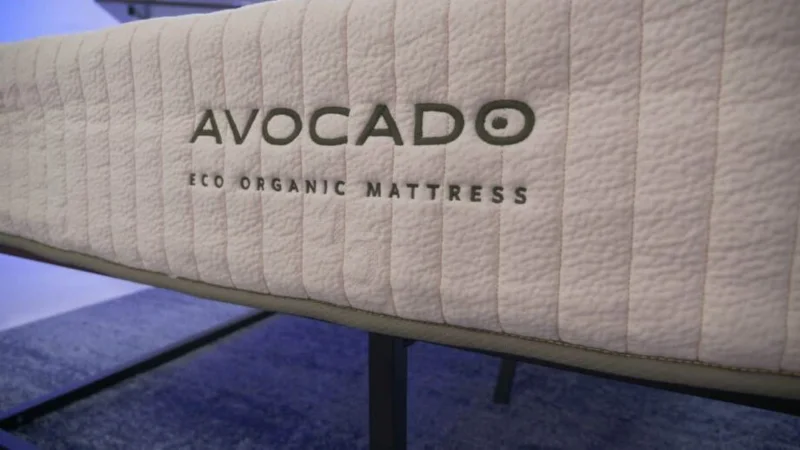
There’s some confusion over what constitutes a “natural” mattress versus an “organic” mattress, and brands can muddy the water with vague terminology. There’s also the fact that some organic certifications may apply to specific components in a mattress, like wool or latex, but that doesn’t mean the entire mattress has been certified organic. It means that many of the beds widely considered organic really aren’t fully organic, and that’s worth understanding.
If you’re actively looking for the best organic mattress or the best latex mattress, these are the certifications that matter:
Global Organic Textile Standard (GOTS)
GOTS is a global organization that certifies natural fibers, such as cotton and wool, as organic when they meet a lengthy set of standards. That includes rules about how they’re processed and dyed, and whether the finished material has any chemical residues. GOTS also analyzes the entire supply chain, which indicates high standards for sustainability and fair labor practices. This certification is difficult to earn, which makes it quite trustworthy.
One note: the GOTS label has two versions. “Made with Organic” means 70% to 94% of the fibers are organic. “Organic” requires at least 95%.
Global Organic Latex Standard (GOLS)
GOLS is for latex foam (and it’s entirely separate from GOTS). It indicates the presence of at least 95% organic rubber latex, with additional standards pertaining to harmful substances, emissions, and material percentages.
Like GOTS, GOLS looks at the entire supply chain, from where and how the latex is harvested to how it’s produced. That makes it another trustworthy certification.
If you’re comparing Dunlop latex to Talalay latex, it’s helpful to know that only the former can currently earn GOLS certification.
GOTS vs GOLS: What’s the Difference?
Don’t let the similar letters fool you — these standards aren’t affiliated at all. One sets standards for textiles, and the other sets standards for latex.
Does “Certified” Mean Organic?
Nope, and that’s an important clarification. Many mattress certifications don’t have anything to do with organic sourcing. Instead of telling you what’s in a mattress, including where it came from and how it was produced, they focus on chemical safety or emissions.
There’s another certification that can be especially confusing, because it has “organic” right in the name. The Organic Content Standard, or OCS, means a mattress contains organic materials grown and processed according to standards set by the USDA or an approved international equivalent. Basically, it answers the question “how much of this mattress is organic?” The seal alone doesn’t mean the bed is completely organic. It’s simply confirming what the manufacturer says about the organic content — and that can be really low.
OCS also doesn’t evaluate factors such as processing, chemicals added later in the manufacturing process, or social and environmental practices. That means it’s not quite the stamp of approval that GOTS and GOLS are.
Can a Mattress Be Certified Organic by the USDA?
The USDA handles organic certifications, but they’re mainly for food and agricultural products, so you won’t find a “USDA organic” label on a mattress. Both GOTS and GOLS are better indications of organic materials in a mattress than the USDA.
Which Certifications Matter for Foam Mattresses?
If you’re shopping for a memory foam or polyfoam mattress, different certifications apply. Here’s what to look for:
CertiPUR-US
CertiPUR-US is a certification many of the most popular beds-in-a-box and memory foam mattresses hold (you can find it on foam pillows, too). It’s a sign that the foam itself is made without harmful chemicals, pollutants, or toxins, including ozone-depleting substances, formaldehyde, heavy metals, and chemical flame retardants. It also meets low VOC (volatile organic compounds) emissions.
OEKO-TEX
For mattresses, the most common OEKO-TEX certification is Standard 100. It means the textiles in a mattress have passed safety tests confirming they’re free of harmful or toxic chemicals. That includes substances such as known carcinogens, heavy metals, pesticides, formaldehyde, and phthalates, some of which are endocrine disruptors.
OEKO-TEX is unique because it applies to every component of a certified product. In a mattress, that’s all of the inner textile layers, the cover, the quilting, the zippers, the labels, even the threads. If one component fails, the whole thing fails and won’t earn the certification.

GREENGUARD
GREENGUARD is entirely focused on standards for low emissions. That telltale “new mattress” smell is a VOC emission. High levels can be harmful to your health, and GREENGUARD certification indicates that a mattress has been tested and measured to ensure safety.
An organization called UL Solutions is responsible for the testing and certification process. For mattresses, there are two levels: GREENGUARD and GREENGUARD Gold. GREENGUARD Gold certification sets lower VOC emission limits (lower than GREENGUARD), making it better suited to mattresses used in babies’ and kids’ rooms, healthcare facilities, schools, and anywhere where chemical sensitivity is an issue.
Can a Mattress Have Multiple Certifications?
Yes, and the better mattresses usually do. Since most certifications only cover one material or answer one question, a single seal can leave gaps. Multiple certifications can cover more of the materials used in a bed — GOTS and GOLS tell you that both the textiles and the latex are organic and sustainably sourced.
Does a Certification Mean the Entire Mattress Is Certified?
It’s easy to assume that a certification label proudly displayed on a product page or a label means it applies to the whole mattress. But that’s not always the case.
Some certifications only ever apply to a single material. GOLS is for latex only. CertiPUR-US covers polyurethane foam. A bed can have both of these certifications if the manufacturer uses both foam and latex in its construction. However, GOTS certifies all the textiles used in the products.
GREENGUARD Gold differs from GOLS, GOTS, and CertiPUR-US in that it tests the finished mattress,
How Can Shoppers Verify Certification Claims?
Greenwashing — the misleading practice of implying a certain eco-friendly or sustainable standard without actually putting it into practice — is a real issue in the mattress industry. That’s why verifying these standards is a smart move.
When brands earn a mattress certification, it’s accompanied by a license number — that’s the proof that the certification is real. You can plug that number into an organization’s database to verify the certification, or contact the brand directly to request a digital copy of their certification materials.
The Bottom Line
A third-party certification tells you that an independent organization looked at something specific — a foam layer, a cotton cover, or the emissions coming off a finished bed — and confirmed it met a standard. For mattress shoppers, matching the certification to the type of mattress is the most important component.
Another note on certifications: while they can be useful in their specific lanes, they don’t tell you anything about comfort, support, durability, or firmness. You can use certifications to narrow down your list of potential mattress contenders, but the best mattress is still the one that meets your specific sleep needs and preferences.