Product
Type
Score
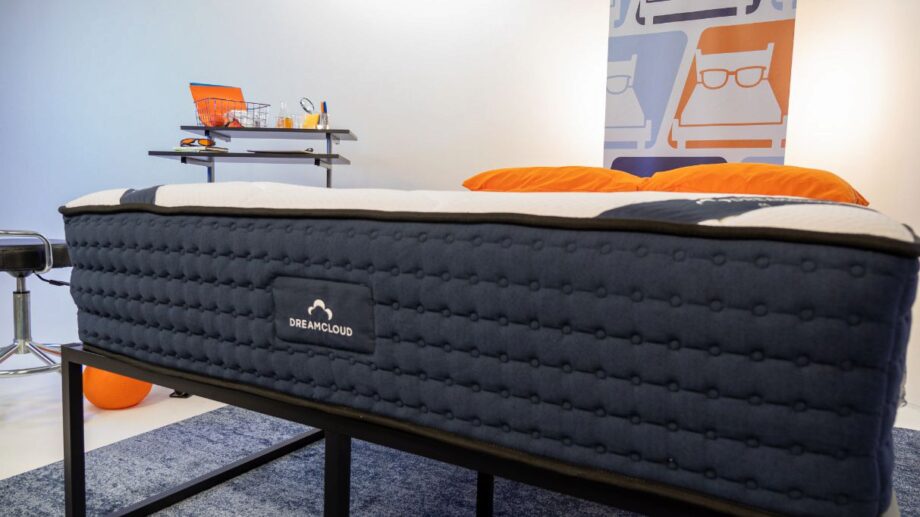

The Mattress Nerd team consists of sleep experts who have tested more than 200 mattresses over the years, including a number of hybrid beds. A constant standout in our reviews has been the DreamCloud Classic Hybrid, the brand’s flagship mattress that combines quality and affordability in equal measure.
Not only has the brand made recent updates to the construction of this mattress, but we’ve also re-tested it in our Charlotte, NC, sleep studio. In addition to running it through a series of performance tests, we got some long-term feedback from one of our colleagues, Matt Schickling, who owns the bed. What we’ve found is that the DreamCloud still lives up to the hype. It has a luxurious, medium-firm, balanced hybrid feel that should offer comfort and support in equal measure to a wide range of sleepers. Curious if you’re one of them? Continue reading to find out!
The DreamCloud mattress brings a high-quality, hotel-like feel to the bed-in-a-box market. It performed well in all of our tests, a sign of a jack-of-all-trades bed. But we specifically recommend it to couples, back sleepers, and hot sleepers. If you’re on a budget, you’ll also love the bed’s affordable price.
The bed may not offer the right pressure relief for some side sleepers, especially if you have concerns about hip or shoulder pain. Moreover, if you love a traditional, super-contouring memory foam feel, you likely won’t get that with this mattress. Even with its softness up top, it still primarily offers a more supportive hybrid feel.
Financing options are available for this mattress.
Who’s going to love it:
Who should steer clear:

The DreamCloud mattress is a truly well-rounded pick, scoring at least a 4 in all of our testing categories. This led to an impressive overall score of 4.7 out of 5. It earned perfect scores for both ease of movement and noise, which means it should be a very bouncy yet very quiet bed. Its lowest scores were in edge support and pain relief, but even these were rated at an admirable 4.2 out of 5.
| Body Type: | Back Sleepers | Stomach Sleepers | Side Sleepers |
| Lightweight < 130 lbs: | 4.5 | 4.5 | 4 |
| Average-weight 130–230 lbs: | 5 | 4 | 3.5 |
| Heavyweight > 230 lbs: | 5 | 3 | 4 |
1 = Very poor 2 = Not good 3 = Fair 4 = Good 5 = Excellent
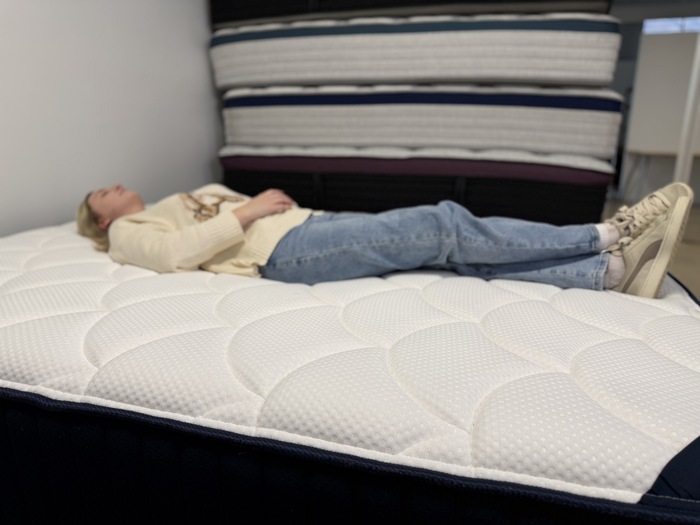
Back sleepers need a balanced sleep surface that offers both soft cushioning and spine-aligning support. They’ll likely receive that on the DreamCloud mattress, regardless of their body type.
Lightweight tester Riley Otis loved the “soothing sinkage” she achieved on her hips that created plenty of pressure relief without compromising her alignment. She also appreciated the way it contoured to her lower back, filling in the gap at her spine.
Our average-weight tester also praised the bed’s gentle contouring but was more impressed with the support. “I like it much better than side-sleeping,” she said. “The alignment and pressure relief are great.”
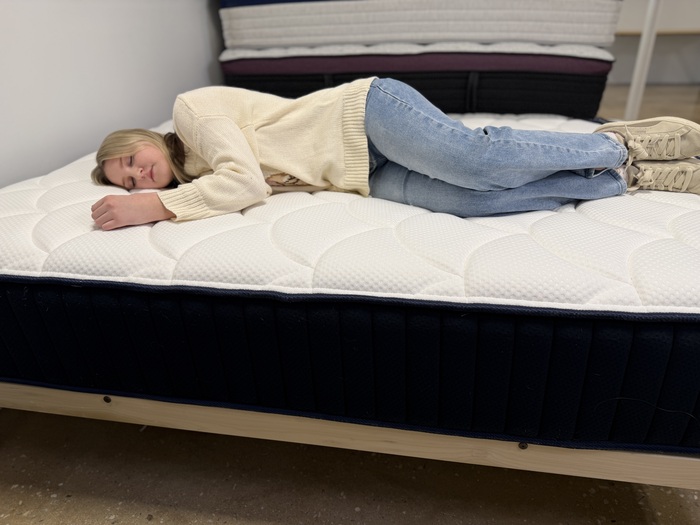
If you’re a side sleeper, you’ll want a mattress that contours to your hips and shoulders, allowing them to sink in comfortably.
Once again, Riley loved the mattress on her side as a lightweight sleeper. She noticed a touch of pressure on her shoulder, but this was swiftly alleviated with a pillow. “There’s a lot of sinkage in the hips, but my spine feels aligned,” she said.
On the other hand, our average-weight tester encountered a bit of pushback from the mattress. While she found some pressure relief around the shoulders, she noted that her hips felt as if they were dipping out of alignment. “This led me to feel a bit of pain in my back,” she explained.
But Matt Schickling, a heavyweight sleeper who owns a DreamCloud mattress, regularly sleeps on his side without complaint. He even often deals with shoulder pain and found it wasn’t a problem on this mattress.
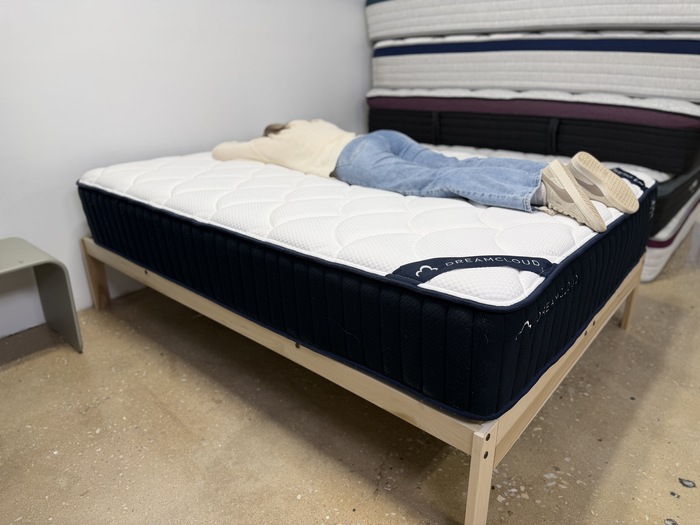
Stomach sleepers require a mattress that can properly support them, keeping the hips elevated so they don’t fall out of alignment with the rest of the body. Otherwise, they risk causing lower back pain.
The DreamCloud has a slightly softer feel, so while it may not work for most stomach sleepers, it was a hit with lightweight tester Riley. “I do feel like my hips are sinking a little, but it’s not to the point where I’d be worried about pain,” she said. “There’s no pressure, and my chest is cushioned.”
She did note that sleepers who weigh more than she will likely not encounter this experience. Matt agreed, “As a heavyweight sleeper, I think this bed is a little too soft for stomach sleepers in my weight range.” These sleepers will likely sink in too far, compromising their alignment and potentially causing discomfort or pain.
Combination sleepers switch between multiple sleeping positions, sometimes all three. What’s important for these folks is that it’s easy to move around on the surface of the mattress. The last thing you want is to feel “stuck” when trying to get comfortable.
Thankfully, the DreamCloud mattress offers excellent ease of movement with the help of its supportive coil unit. Even as a heavyweight tester, Matt found that, “You don’t sink too far in when you lay on it, so it’s easy to adjust and change positions.”
We gave the DreamCloud a medium-firm rating, or 6.5/10 on our firmness scale, with 10 being the firmest possible. However, this number can change depending on your size. For example, this mattress will feel a bit firmer to lightweight sleepers — more like a 7.5 firmness. For heavyweight sleepers, it might feel more like a 5.5/10 because they’ll likely sink deeper in the mattress.
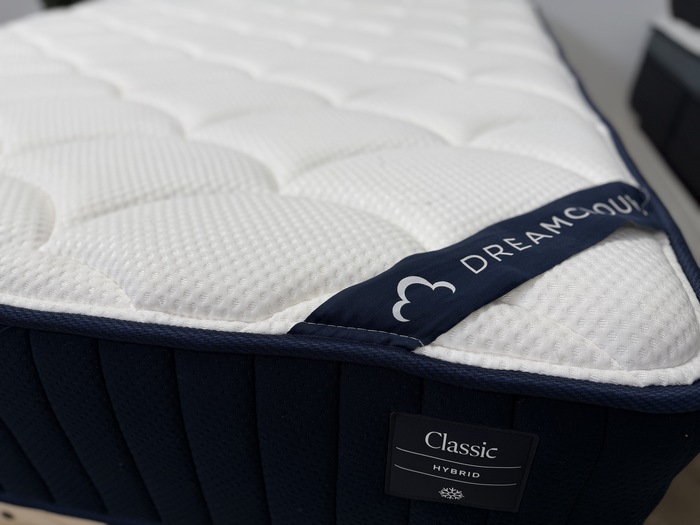
The DreamCloud has a true hybrid feel. When you first lie down, you feel cushioned by the soft memory foam top layers. The further you sink into the mattress, the more you notice the support of the coil layer. We feel more “on top” of this mattress than hugged by it.
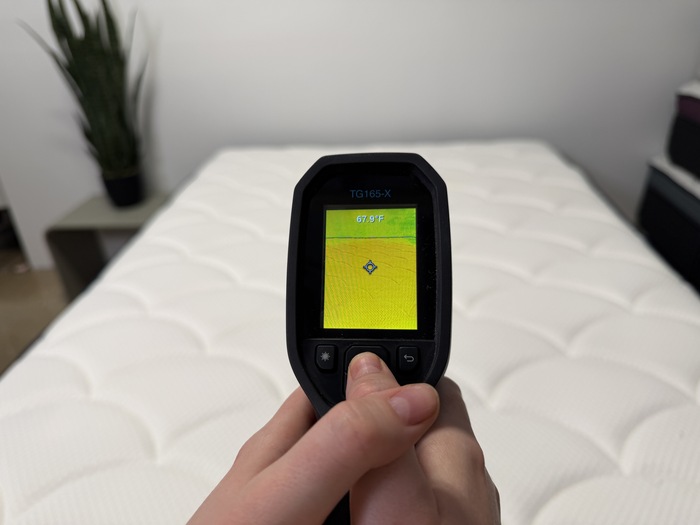
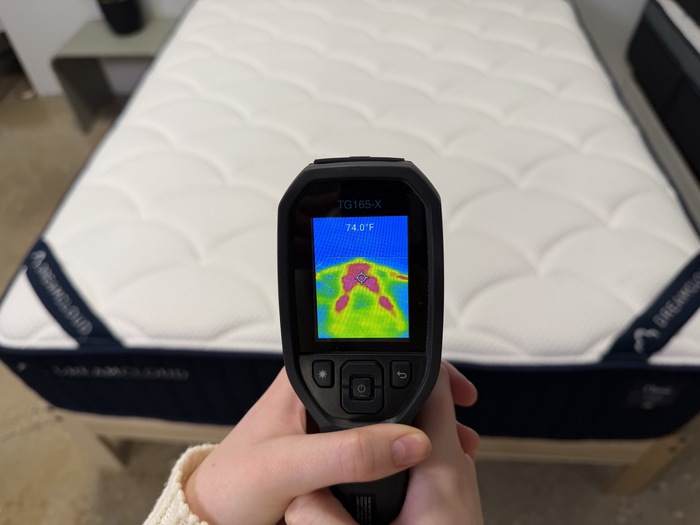
The DreamCloud mattress features a breathable cover and a hybrid construction geared toward keeping air flowing through the mattress. When lying down on the mattress for a few minutes, we initially felt the cover’s cool-to-the-touch feel, but this feeling dissipated with time. Based on these results, we awarded the bed a 4.3-out-of-5 cooling score.
This sentiment was echoed by Matt, who owns the DreamCloud mattress at home. “I wouldn’t classify this as a mattress that sleeps particularly cool or particularly hot,” he said. “It’s about average, leaning good, in that respect. I will say that I’ve never felt overheated because of the materials of the bed.”
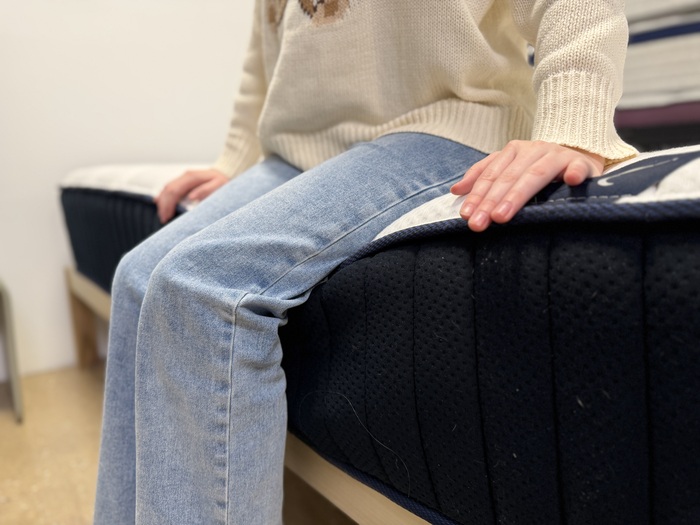
At first glance, the DreamCloud has fairly strong edges. Only the pillow top seems to collapse when bearing weight, which is more noticeable when seated on the edge of the bed. Lying down should be relatively straightforward. In turn, we rated the overall edge support at 4.2 out of 5.
As Matt put it, “You can sleep right up to the edge of the mattress without feeling like you’re going to fall into the abyss. I’m a bigger guy, and I often lay along the edges of the bed to sleep.” He also noted that over the 4 months he’s owned the mattress, he hasn’t noticed “any sagging or degradation of quality.”
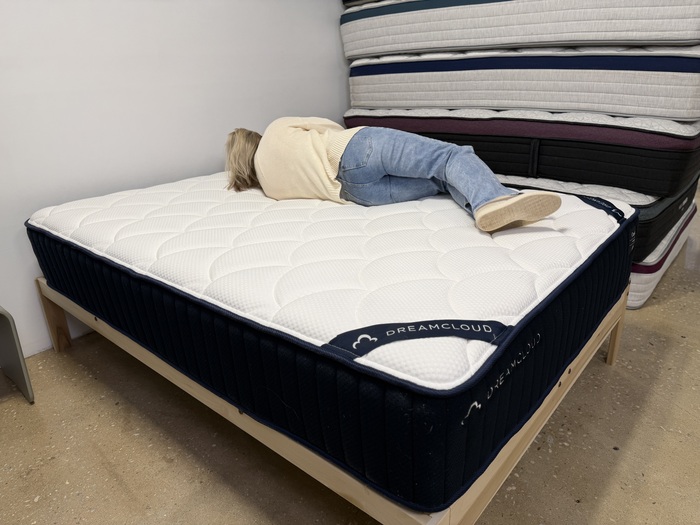
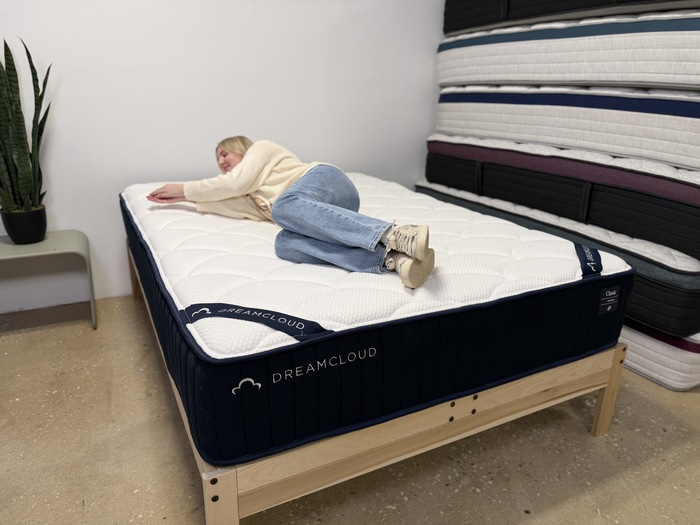
We found the DreamCloud to have a super-bouncy and responsive surface, meaning it snaps back into place when you push down on it. Matt proclaims that he “has never felt ‘stuck’ in this bed,” despite the softer pillow top.
“Combination sleepers should have no trouble moving around on the surface of this bed,” added Riley when she performed the responsiveness test. She awarded the bed a perfect 5-out-of-5 score for responsiveness.
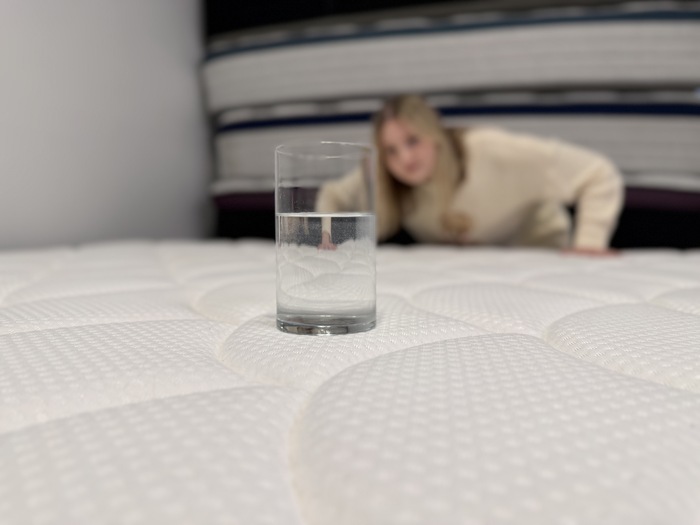
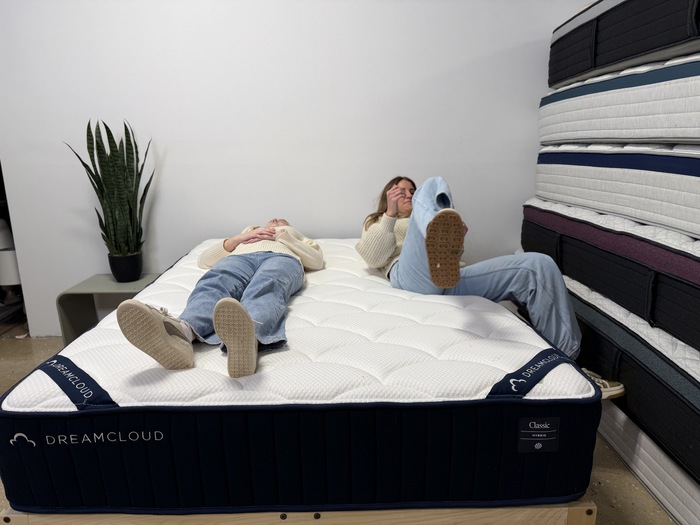
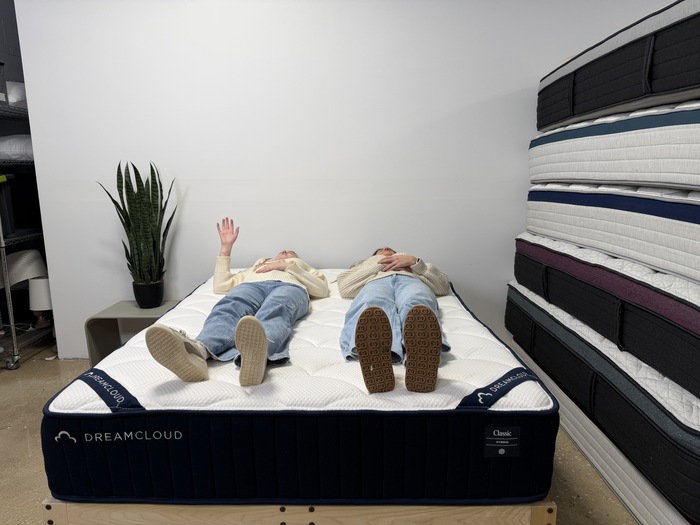
This category tackles how it feels to sleep with a partner. A bed that isolates motion well will keep movements relegated to one side of the bed, absorbing them before they can travel across the surface.
When it comes to the DreamCloud, we thought its bounce meant that it wouldn’t excel in this category, but we were pleasantly surprised. Riley could only feel when another tester was rolling around on the bed next to her, but even then, the movement was slight. Therefore, we gave the mattress a motion isolation score of 4.3 out of 5, a sign it should be a great mattress for couples.
Matt experienced similar results at home. “I do feel some movement when my wife or one of our dogs gets in or out of the bed, but it’s not something that would wake me up in the middle of the night — and I’m a light sleeper,” he explained. “I am also one to toss and turn, and I have not yet woken up my wife doing this on this mattress, so that’s a plus.”
Matt called the DreamCloud mattress “virtually silent,” despite the coils in its construction. There’s no squeaking or creaking to speak of, but note that this could change when the mattress gets older. For now, though, it gets a perfect score for noise.
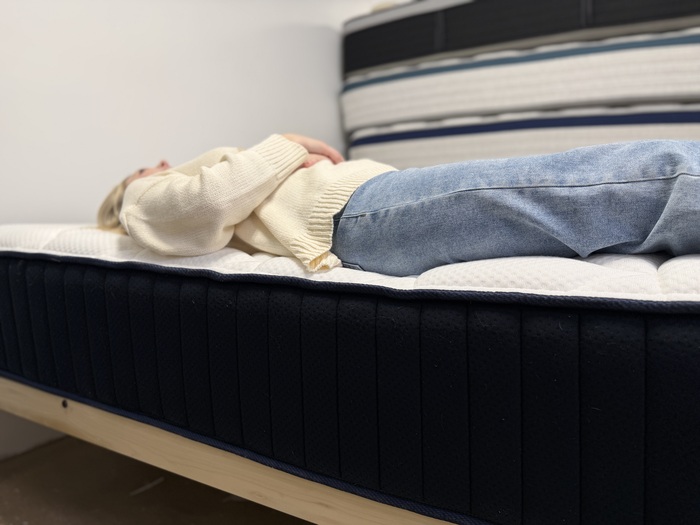
The DreamCloud’s medium-firm feel and contouring pillow top can work wonders for sleepers dealing with aches and pains. Matt experienced it firsthand. “I was having near-constant low-level lower back pain prior to buying this mattress that has since dissipated,” he said, though he added that lifestyle changes could have also factored into this improvement. “But the good news: it hasn’t returned, and I feel great when I wake up.”
Matt has also dealt with chronic shoulder pain, which poses an issue when it comes to side sleeping. However, he “has not yet had an issue with this” by his own admission. “It’s been a real game changer for me,” he said.
I will note that Matt describes himself as a heavyweight sleeper (a sleeper over 230 pounds). What feels good to you can change depending on your body type. For example, Riley, a lightweight sleeper (under 130 pounds), noted she felt more pressure buildup along her hips, whereas the pressure relief was concentrated around her shoulders.
The balance of support and softness that the DreamCloud offers should relieve pressure around sensitive parts of the body for a number of sleepers. Some might want to tread cautiously, especially if you sleep on your side. Based on the experience of our colleagues, we ultimately decided on a 4.2-out-of-5 rating for pain relief overall.
A good mattress for sex should do well in three areas: ease of movement, edge support, and noise level. Thankfully, the DreamCloud mattress scored highly in all three, netting it a 4.7 out of 5 score for sex. The bed has plenty of bounce without the creaking, so repositioning should be easy. Edge support may be the only area where you encounter some sinkage, but it shouldn’t be enough to detract from the main event, and you should still be able to make full use of the bed’s surface area.
We found the DreamCloud mattress looked and felt well-constructed in our tests. But the real test is the one of time, and Matt has owned the mattress for a few months. “It’s held up remarkably well over that time period,” he said. “There are no noticeable differences from the day I unboxed it. It seems like it’s made with high-quality materials and I expect that it will last for several years.”
The DreamCloud is a hybrid mattress, so it features a mix of memory foam and pocketed coils in its construction. Hybrid mattresses provide more support and bounce than memory foam beds, while allowing more contouring than traditional innerspring mattresses without foam.
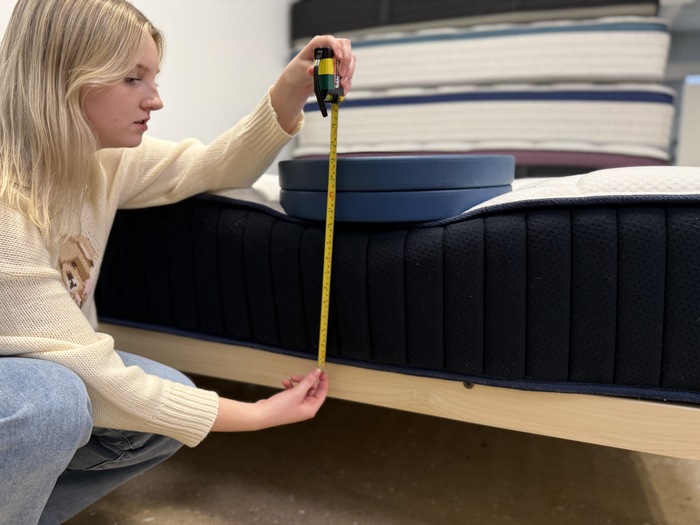
This mattress stands at about 12” tall. Its weight varies from 45 lbs to 50 lbs, based on the size you choose. A queen-size DreamCloud mattress should weigh about 79 pounds.
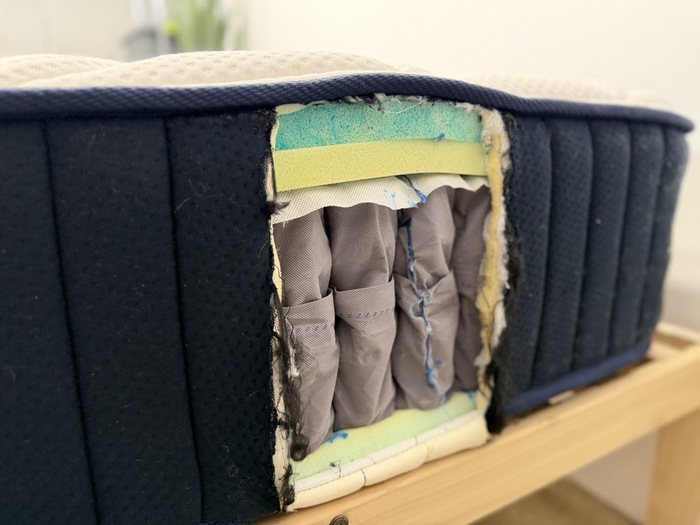
The cover layer of the DreamCloud mattress is made with quilted cooling fibers, providing a soft and breathable sleep surface.
Underneath the cover are two foam comfort layers. The first is a contouring layer to offer pressure relief.
The next comfort layer is a more responsive, firmer foam layer that’s designed to support the spine. This helps transition into the innerspring unit below.
The coil layer is made up of hundreds of individually wrapped coils. These provide pinpoint support and responsiveness, while their independent movement assists with isolating motion. The coils around the edges are reinforced for better edge support.
Everything sits on top of a thin but dense foam layer to give the entire structure stability.
The DreamCloud is an online mattress that ships for free within the contiguous U.S., and ships to Hawaii and Alaska for a $150 charge. Their mattresses typically ship within seven to 14 business days. They’ll arrive compressed in a box, which can be easily transported into the bedroom for a straightforward setup.
When unpacking the mattress on your own, we definitely recommend enlisting a friend for help. Mattresses can be pretty heavy, and the DreamCloud is an especially large bed. Aside from the weight of the mattress, unboxing the DreamCloud mattress was a simple experience for our team. Once our testers got the mattress on the base, we easily cut open the plastic wrap, and it inflated in less than two minutes.
DreamCloud offers a “Forever Warranty,” which is their version of a limited lifetime warranty, on all of their mattresses. That means that if your mattress becomes damaged from normal wear anytime during your ownership, the company will replace the mattress at no charge to you (note that you must be the original owner). DreamCloud defines “normal wear” as permanent body impressions that are more than 1.5” deep.
The only caveat is that after 10+ years of ownership, you may incur a $50 transportation fee to redeem your replacement or repair offer. DreamCloud notes that it will be reimbursed once a defect is found. Also, make sure to include the mattress cover that came with your mattress, and that it’s been used on a proper base, else the warranty will be void.
When ordering a bed-in-a-box mattress online, we know you may have some reservations about buying before trying. But that’s where sleep trial periods come in! A sleep trial is a period where you can test out your mattress at home and decide to return it if you don’t like it.
DreamCloud offers one of the more generous sleep trial periods in the industry: 365 nights. That means you get a full year to test out your DreamCloud mattress in your own bedroom. And if you decide it’s not for you? DreamCloud will give you a full refund and coordinate the removal of the mattress.
DreamCloud’s customer support is available seven days a week, during the hours of 6AM to 7PM PST. They have a telephone number you can call, but also an email or live chat function should you prefer written communication. We haven’t encountered any issues contacting customer service, so you should be able to reach out with any questions, concerns, or to initiate a return.
| Mattress Size | Price | Dimensions |
| Twin | $399.00 | 38" x 75" |
| Twin XL | $549.00 | 38" x 80" |
| Full | $579.00 | 54" x 75" |
| Queen | $649.00 | 60" x 80" |
| King | $849.00 | 76" x 80" |
| California King | $849.00 | 72" x 84" |
The above prices don’t always account for sales or promotions. Check the current price of the DreamCloud by clicking the button below.
Not sure if the DreamCloud mattress is for you? Here are some other popular hybrids that might fit your fancy.
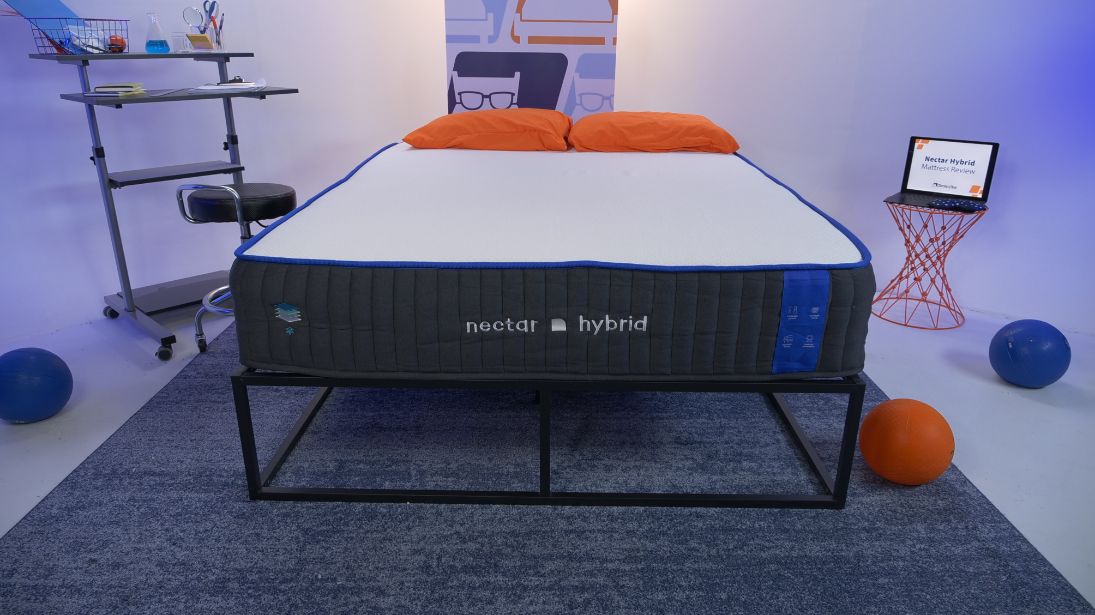
Both the DreamCloud Classic Hybrid and the Nectar Classic Hybrid are, as the names imply, hybrid mattresses. They even come in at similar price points, with the Nectar being a bit more expensive at $799.
The Nectar hybrid has a softer, more traditional memory foam feel when compared with the DreamCloud. It’s probably the better choice for side sleepers. If you’re a stomach sleeper, you’ll have better luck on the DreamCloud. The DreamCloud is also bouncier than the Nectar, which has that classic slow-moving, memory foam feel.
Read more in our Nectar Classic Hybrid mattress review.
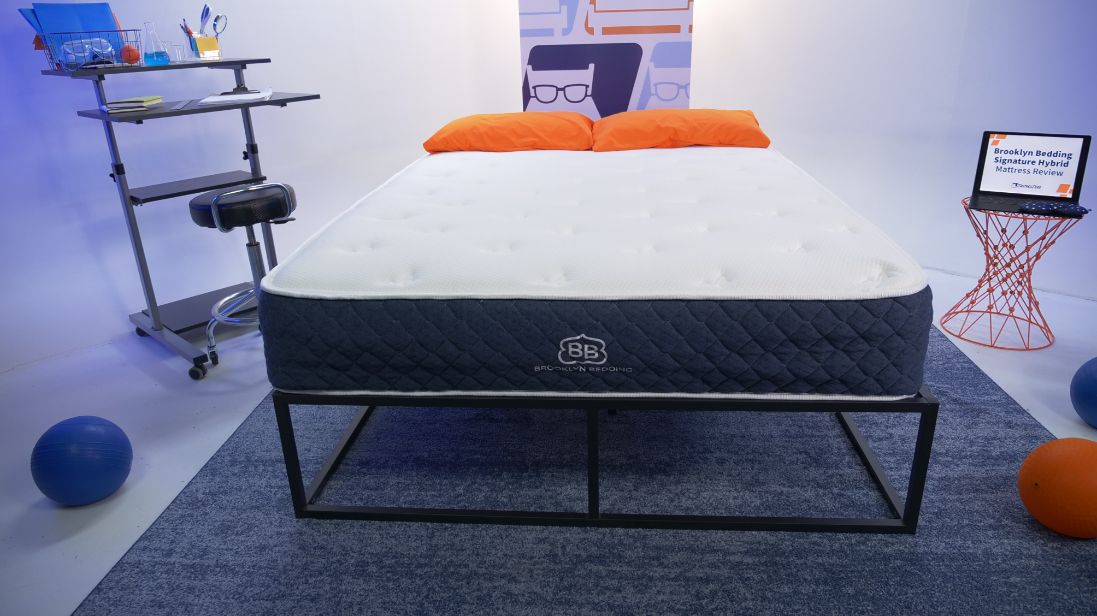
The DreamCloud hybrid is available in only one firmness option, and maybe you like the luxury of choice. The Brooklyn Bedding Signature Hybrid comes in multiple firmness levels (soft, medium, and firm) for your own choosing.
The medium model of the Brooklyn Bedding Signature Hybrid is a bit firmer than the DreamCloud, but still offers a similar amount of pressure relief. Both mattresses are well-suited to back sleepers, although the softer model of the Signature Hybrid should better appeal to side sleepers. The Signature Hybrid does cost quite a bit more than the DreamCloud, and it doesn’t offer much in the way of fancy features — it’s a simple but effective bed.
Read more in our Brooklyn Bedding Signature Hybrid mattress review.
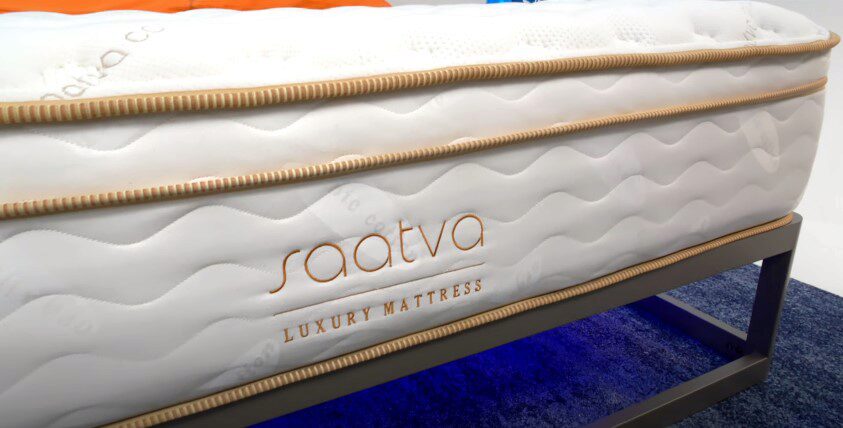
If you really want to sleep in the lap of luxury, consider taking a look at the Saatva Classic. This mattress features coils and a pillow top like the DreamCloud, but it takes everything to the next level. For one, this bed includes not just one but two coil units, which means double the support and double the bounce.
The Saatva Classic does come with a luxury price tag, more than twice what you’ll pay for a queen-size DreamCloud, but I think it’s well worth it. The brand offers free white glove delivery with its mattresses. The only downside is that the DreamCloud mattress offers better motion isolation than the Saatva, so it’s likely the better pick for couples.
Read more in our Saatva Classic mattress review.
We definitely think DreamCloud is a good mattress brand. The beds are high-quality and come with generous policies. The purchase of any mattress includes a 365-night sleep trial and Forever Warranty, so you’re completely covered if you end up not liking the mattress or encountering any defects.
The most common problems we see with DreamCloud beds is them feeling too firm or soft for certain sleepers. This is a subjective metric, but we recommend the DreamCloud Classic Hybrid specifically for back sleepers. Some side sleepers may experience shoulder or hip pain, while some stomach sleepers might sink in too far. In terms of customer reviews, a few report that the edge support isn’t robust as they would like.
Whether DreamCloud is better than Tempur-Pedic depends on your personal preferences, needs, and budget. The DreamCloud is definitely more affordable than a Tempur-Pedic mattress, but you don’t get the same level of customization as a Tempur-Pedic bed. DreamCloud mattresses are likely bouncier than Tempur-Pedic beds, while the latter may offer more in the way of deep cushioning and pressure relief.
The DreamCloud mattress is a durably constructed hybrid, so we expect it to last you at least seven years. After this point, you may notice indentations forming in the foam layers or other signs of wear-and-tear. Fortunately, DreamCloud protects their mattress with a Forever Warranty, which shows how confident they are in their product.